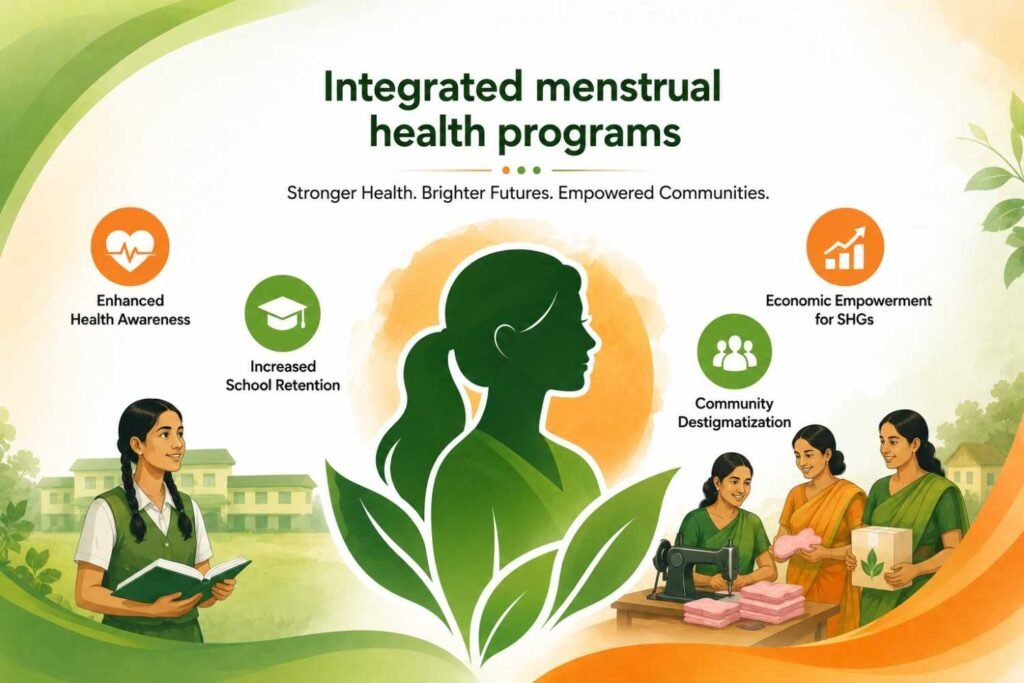
Har Ghar Rojgaar: Menstrual Hygiene for Health, Dignity & Livelihood
Goal
To improve menstrual hygiene awareness and access to affordable menstrual products while creating sustainable income opportunities for women through self-help groups (SHGs). Community-based awareness, family engagement, and behavior change are key elements of successful menstrual health programs.
Objectives
Increase awareness about menstrual health and hygiene. Reduce myths and stigma surrounding menstruation. Create employment for local women through the production or distribution of menstrual products. Ensure affordable access to sanitary products in rural and underserved communities.
Target Beneficiaries
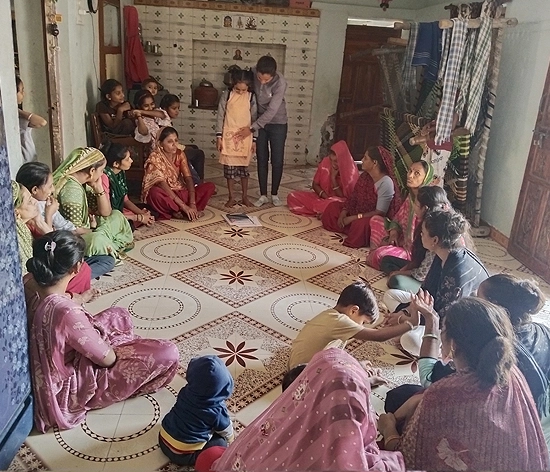
Adolescent girls (10–19 years) Women in Urban,Semi Urban and Rural areas Self-Help Groups (SHGs) Schools and colleges Activities Awareness Campaigns Conduct workshops in schools, villages, and community centers. Educate girls, boys, parents, and teachers about menstruation and hygiene. Distribute educational pamphlets and posters.
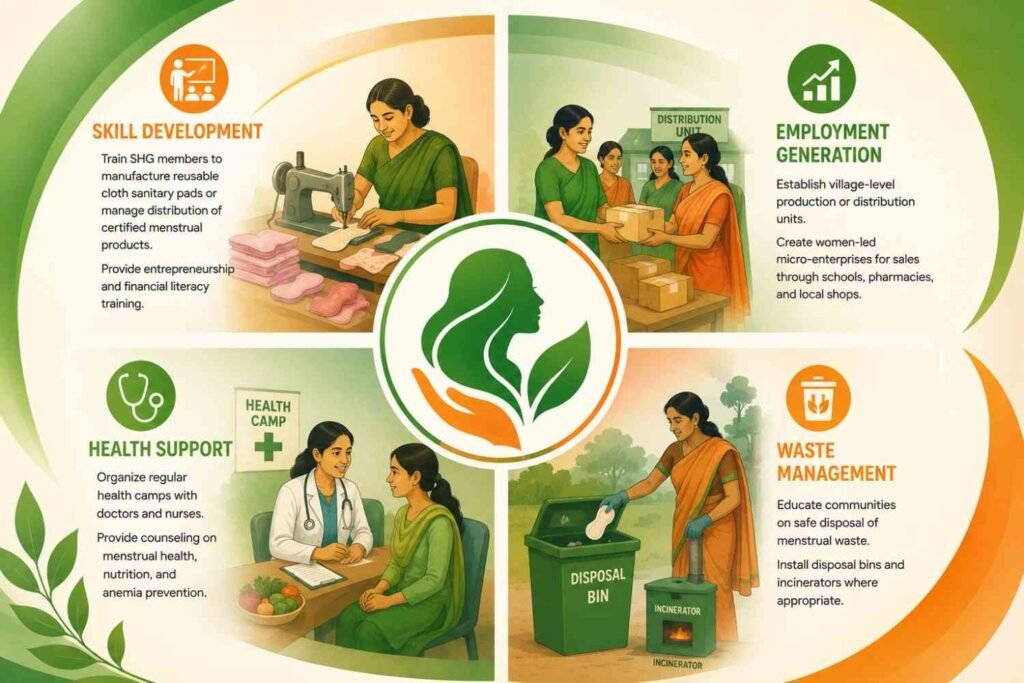
1. Skill Development Train SHG members to manufacture reusable cloth sanitary pads or manage distribution of certified menstrual products. Provide entrepreneurship and financial literacy training.
2. Employment Generation Establish village-level production or distribution units. Create women-led micro-enterprises for sales through schools, pharmacies, and local shops.
3. Health Support Organize regular health camps with doctors and nurses. Provide counseling on menstrual health, nutrition, and anemia prevention.
4. Waste Management Educate communities on safe disposal of menstrual waste. Install disposal bins and incinerators where appropriate.
Expected Outcomes
Improved menstrual hygiene knowledge. Reduced school absenteeism among girls. Increased income for SHG women. Reduced stigma around menstruation. Better access to affordable menstrual products.